From Post-Conflict to Proxi-Temporal Peacebuilding: Rethinking Universities and Ways of Knowing Peace During Active War
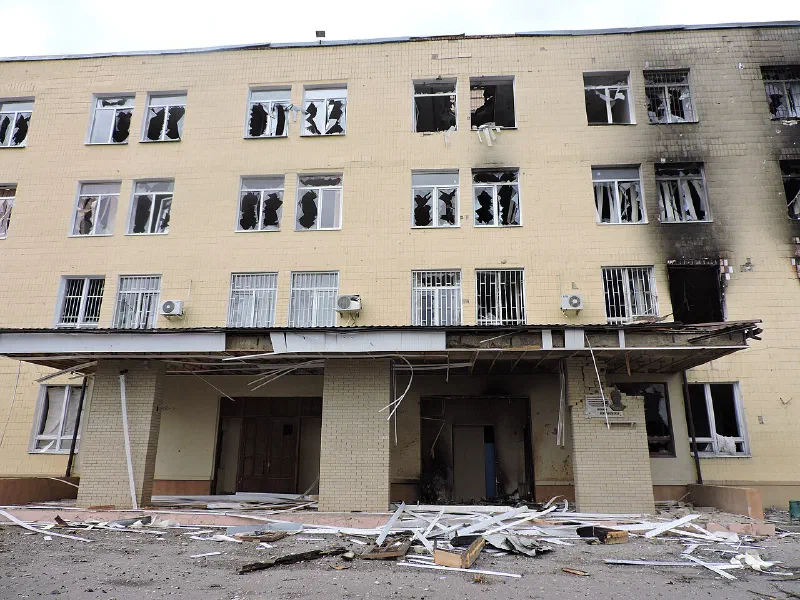
Although the United Nations Sustaining Peace agenda defines peacebuilding as a process extending “before, during, and after” conflict, the middle term of “during” remains much less theorised than prevention and recovery. This paper presents the Proxi-Temporal Peacebuilding Framework as a response, arguing that proximity to conflict, and the temporality of living through it, shape both what peace can be and how it can be known.
Abstract
Over the last three decades, peace scholarship has produced a wealth of literature about conflict prevention, conflict transformation, and post-conflict reconstruction. Methodologically, participatory, transdisciplinary and collaborative approaches have also challenged the way that research has treated conflict-affected societies, including them as partners in inquiry rather than simply using them as source of data. United Nations Sustaining Peace agenda in 2016, at a policy level has defined peacebuilding as a process that extends “before, during, and after” conflict. Although it widened its temporal horizon the middle term of “during” remains much less theorised compared to prevention and recovery.
In this paper, I illustrate the need for a new methodological approach and present the Proxi-Temporal Peacebuilding Framework as an ontological, epistemological, and methodological response to this problem. I argue that active conflict is not merely the background behind the work of a researcher. Proximity to conflict, and the temporality of living through it, shape both what peace can be and how it can be known. Building on participatory peace research, critical pedagogy, feminist relational methodologies, and the United Nations Sustaining Peace agenda, I argue while war continues universities can become conflict-embedded communities as they continue to teach, research, collaborate, and maintain different forms of social continuity. I argue, operationalising the “during” dimension requires methods that combine participation with trauma-aware ethics. Equally, local co-production of peace knowing requires sustain attention to changing relationships and risk. Therefore, the framework is offered as a foundation for how we do research, teach, and peacebuilding in the midst of conflict, rather than in anticipation of, or retrospect upon, its end.
Keywords: Proxi-Temporal Peacebuilding; sustaining peace; active conflict; participatory research; universities; peace pedagogy; conflict-embedded ways of knowing.
Introduction
The past three decades, have witnessed the shift in peacebuilding moving beyond its earlier association with the period armed violence. The field now includes conflict prevention, reconciliation, and the strengthening of political, social, economic, and institutional conditions that can sustain peace over time (Lederach, 1997; Richmond, 2016). In 2016 United Nations Sustaining Peace agenda, defined peacebuilding a process across the continuum of “before, during and after”. This policy expression gave an important shift, placing the work of sustaining peace inside the life of conflict itself by refusing a simple sequence in which war ends and peacebuilding then begins. The research practice, however, has not fully caught up with this expanded claim. As a result, a substantial part of the literature still clusters around conflict prevention before violence escalates (before) and recovery, rebuilding relationships and healing after violence subsides (after). It is hard to locate the place of the middle part “during” in literature, analytically. By “during” in this paper, I mean the time in which violence remains an active part of the everyday life, not a completed event viewed retrospectively. We know less about how peace and peacebuilding should be studied under such conditions, even though the field acknowledges that peacebuilding may already take place within them. This is not a minor methodological oversight when the world is increasingly witnessed to contemporary protracted conflicts. Nurseries open after nights of bombardment as parents go to work, universities teach while staff and students are displaced, civil society organisations adapt and alter their workflow as security conditions change, families and communities continue to navigate and negotiate coexistence in circumstances and environments that are neither peaceful nor fully consumed by war. The research that starts earlier or waits until after than these pivotal movements, risks missing the practices that forms social life while conflict is unfolding. Although retrospective evidence and testimonies remain valuable, they cannot reproduce the uncertainty, partiality and immediacy of living through the event itself.
Participatory Action Research, community-based research, feminist methodology, critical pedagogy, and transdisciplinary work have moved the field closer to this problem by challenging the assumption that credible research depends upon distance from those being researched. They emphasise positionality, reciprocity, and the co-production of knowing with people whose life are directly or indirectly implicated in the subject of inquiry (Freire, 1970; Reason & Bradbury, 2008; Burns, Howard & Ospina, 2021). Critical peace scholarship has made similar moves by highlighting the importance of everyday peace, local agency, and relational forms of conflict transformation that are usually overlooked by state-centred models (Mac Ginty, 2014; Firchow, 2018; Autesserre, 2021). Together, these efforts no longer allow the lived experience to be reduced to peripheral.
Equally, recent wartime scholarship pays attention to this problem by giving concrete example difficulties in conducting research in wartime. Sereda and Mikheieva (2026), writing from research experience in Ukraine, demonstrate how war unsettles research design at every level. They argue research in war changes terminology, sampling, access, data collection, researcher positioning, participants safety and even the circulation of findings. Their work is important because it shows active conflict is not a neutral setting that ordinary research procedures can be easily transferred in to. Yet their main concern is the reliability and the ethics of knowledge production about war-affected societies. My concern begins from what they discover as the problem but moves in different direction. I ask not only how war changes research, but how peace itself can be known to be. Hence, the gap cannot be addressed by transporting existing methodologies into war setting. There is a need for a framework that examines the relationship between proximity, temporality, and the recognition of peace. I call this the Proxi-Temporal Framework which is an ontological, epistemological, and methodological approach to research, praxis, teaching, and practicing peacebuilding during active war.
Two components systematize the framework. The first is proximity. I use proximity here not only to define geographical closeness, but to address a relational and ethical condition that reveals exposure, responsibility, and reciprocal accountability. The second component is temporality. The moment of experiencing violence and unfinished conflict forms what can be perceived, asked, remembered, known and interpreted about peace. Brought together, proximity and temporality create what I call Proxi-Temporal Space: a conflict embedded space in which peace and war do not appear as separate stages. Peace may instead be recognised in education, felt in institutional continuity, encountered in social relationships, and found in ordinary acts of coexistence that whilst violence continues to unfold.
This framework does not introduce another participatory method under a new label; it brings several existing developments into a debate with a question that, in my view, has not received similar methodological attention: what does it mean to know peace during war? By holding “during” as a distinct field of inquiry on its own merit, the framework links debates on participation, higher education, peace pedagogy, and sustaining peace to a set of methodological and ethical issues generated by active conflict itself. Universities can play a central role in making inquiries about that question because they can be both affected by war and yet actively engage in sustaining intellectual, social and institutional life.
From Post-Conflict to Participatory Peace Research: The Evolution of Peacebuilding Scholarship
Peace research no longer is just concerned with explaining war and identifying the conditions of stable peace. Galtung’s (1969) distinction negative peace, the absence of war, and positive peace, the presence of social justice, and conditions that encourage individual and collective well-being of people, has broadened the conceptual horizon of the field. Structural and cultural forms of violence have also been addressed for peace to have a real meaning (Galtung, 1969; 1996). Lederach’s (1997) work on conflict transformation took this relational understanding further. Durable peace, he claims, cannot be secured through agreements alone. It requires changes in relationships, social structures, and patterns of interactions. His work moved peacebuilding even farther away from a narrow concern of managing conflicts towards a longer process involving several actors across different horizontal and vertical levels of society.
In turn, the critique of liberal peace shifted the attention towards local agency and everyday practice. Richmond (2016), Mac Ginty (2014), and Alasuutari (2021) are a few academics who challenged intervention models in which peace was designed outside the conflict zone and imported to conflict-affected societies. Their work revealed the importance of informal relationships, local negotiations, and ordinary practices through which people shape workable forms of coexistence. Firchow’s (2018) Everyday Peace Indicators empirically showed that communities often mark peace and insecurity through measures that are significantly different from those designed by international organisations.
Over time, the ontology of peacebuilding changed to a relational one attentive to everyday life. Its temporal positioning, however, underwent modest change, resulting in prevention and post-conflict recovery dominating the field. Notably, research on everyday peace often asks how relationships can be mended after war or how future conflict might be prevented. Little attention is paid to ways of knowing peace, while violence is unfolding and the future of conflict is unresolved. This temporal problem came into clearer view by the United Nations Sustaining Peace Agenda, defining peacebuilding across the periods “before, during and after” conflict (United Nations General Assembly, 2016; United Nations Security Council, 2016). In policy terms, it was an important break; methodologically, however, the implications of the shift remain unevenly developed. How peace can be investigated while violence remains active is an ongoing social reality that needs more attention.
The experience of Ukrainian universities following Russia’s full-scale invasion is a useful illustration of this temporal gap. It is documented that universities continuing to teach despite displacement, air-raid warning, power outage, damage to infrastructure and buildings. Students’ account of interruptions during examinations by alert, or resumed in shelters and institutions’ adaptation through remote teaching, psychological support, and new arrangements in order to preserve educational continuity (Mayer et al., 2023; Błaszczyk et al., 2025) have been interpreted through the language of resilience, adaptation, educational continuity, and crisis response. What is not or less asked is continuation of educational relationships and institutional life in active violence may also reveal something about peacebuilding itself. A classroom may be the place where a person sees familiar faces, where they can think about something other than danger for an hour, where disagreement is still possible without hostility, or simply where life feels recognizable for a moment. A Proxi-Temporal perspective does not automatically classify such practices as peacebuilding, it asks whether, and under what conditions, they might establish ways through which peace, social continuity, and coexistence are sustained and understood during war.
From Participatory Peace Research to Conflict-Embedded Ways of Knowing
A similar movement can be observed in how peace and conflict research realises the production of insight. Conventional traditions valued distance, neutrality, and observation from outside the social world being studied. Therefore, conflict-affected communities appeared as source of information while the researcher retained authority over interpretation. That separation guaranteed confidence that reliable knowledge was produced through methodological detachment and, therefore, the interpretation later transferred into policy and practice.
Later participatory research, critical pedagogy, feminist epistemology, and transdisciplinary scholarship unsettled that model. Across these traditions, the final production of knowledge is situated and relational, meaning it emerges through encounters amongst people who take different positions in relation to the problem being studied (Reason & Bradbury, 2008; Burns, Howard, and Ospina, 2021). This does not mean that distance has no value, however, the detachment cannot necessarily guarantee epistemic authority. In conflict research, the questions of whose experience informs interpretation is married to the politics of the research relationship. These traditions have challenged the divide between academic inquiry and practical life. In many disciplines they have brought the practitioners, communities, and citizens into research process as collaborators rather than only users of academic findings (Lang et al., 2012; Abma et al., 2017; Shannon et al., 2021; Schneidewind, Singer-Brodowski & Augenstein, 2016). In this view, research is not completed first and then applied later. Questions, interpretations, and responses develop through engagement and mutual learning with the problem as it is live. Peace research has followed the same path, as it always carries a concern with social transformation. The field does not make inquiry into why the conflict occurs, it also asks how more peaceful relationships and institutions might be built (Krause, 2019).
The local turn in peacebuilding brought the same challenge into focus through a different lens. Richmond (2016), Mac Ginty (2014; 2021), Alasuutari (2021) and Firchow (2018) question interpretations that peace can be built primarily through formal negotiations or state-building programmes designed by international institutions. They propose everyday relationships, informal practices, and local initiatives are among the places where peace is made and contested. This scholarship shifted attention from externally designed interventions towards the capacities as well as constraints of actors negotiating coexistence in their own environment.
Participatory Action Research (PAR), community-based participatory research, and collaborative action research have also been used more in post-conflict and conflict transformation scholarship (Lewin, 1946; Pace, 2021). Studies of everyday peacebuilding (Firchow, 2018), local and international peacebuilding relationships (Carlarne, 1997), former combatant reintegration (Bliesemann de Guevara & Krystalli, 2022) and intergenerational dialogue (Paterson-Young et al., 2025) demonstrate the value of engaging with those closest to the issue in research process. They also highlight the limits such institutional demands, unequal resources, expectations of benefit, and the practical fragility of collaborative research that do not dissolve when participants become partners or co-researchers.
Other bodies of literature such as arts-based methods, feminist peace research, and friendship methodologies propose the question of what counts as legitimate knowledge and in response offer affect, embodiment, long-term relationship, and shared experience as knowledge rather than treating them as the background of an objective account (Anctil Avoine, 2022). Critical peace education takes a similar position in the classroom, where dialogue, reflection, and praxis can turn students from recipients of expert knowledge into participants in inquiry (Nicoson et al., 2024). None of these approaches resolve the politics of research, yet they make it harder to defend a model in which interpretation belongs to the outsider.
More recent scholarship increasingly demonstrates how war disturbs research at every stage; design, access, data gathering, positionality, ethics, and the reliability of findings. Sereda and Mikheieva’s (2026) analysis of Ukraine illustrates that rapidly changing wartime conditions can make data outdated almost as soon as it is produced, alter who can participate, and place uneven burden on local researchers. I take their diagnosis seriously, but my question is not simply how peace research should be made more participatory or how standard methods should be adapted to insecurity. My argument goes further by asking whether proximity and temporal condition of “during” also shape what peace itself can be known. It is how the unfinished, unstable temporality of war enters the process of knowing itself, dictating what can be asked, what people are able or willing to say, what institutions can sustain, what risks can be taken, and what peace can mean at a particular moment. Under active conflict, meanings do not stand still. As priorities change, relationships shift, institutions improvise, and events can alter the significance of what was said or observed only days or even hours earlier. So, the issue is not simply that war makes research more difficult. The problem is that living through unfinished conflict may alter the very terms through which peace, security, coexistence, and continuity become intelligible.
I refer to Sereda and Mikheieva’s (2026) work again which describes circumstances in which international researchers were unable to enter particular conflict-affected areas and had to depend on researchers who were living and working in Ukraine. This proximity allowed access and contextual understanding, a kind of knowledge that an external researcher could not easily reproduce. It also meant that local researchers carried the burden of risk; exposure to insecurity and emotional proximity, not the international collaborators. Yet international researcher could continue to hold greater control over funding, analysis, and publication. This example shows why proximity cannot be understood simply as better access to participants. The position from which research is conducted affects relationships, risk, interpretations, and what can become evident through the research process. In active conflict, these conditions are also temporal as access, trust and the meaning of what is being said can change as the war itself changes. This example shows the significant of Proxi-Temporal Framework, not that it proves the framework, but that it shows the interaction between proximity, temporality, and ways of knowing that the framework proposes should be investigated systematically.
The United Nations Sustaining Peace Agenda makes this gap clearly visible. General Assembly Resolution 70/262 and Security Council Resolution 2282 define peacebuilding as a process that extends “before, during, and after” conflict. This policy language changes the sequence, but it also leaves an important methodological question behind which begs the question of, how should researchers investigate peace amidst continuing violence, when institutions are functioning intermittently and the condition of participants may change from moment to the next? Although the literature recognises the temporal continuum, it hardly explains how inquiry should carry on within its most unstable phase.
I locate the Proxi-Temporal Framework in the space between this expanded understanding of when peacebuilding should occur and an incomplete account of how peace is known whilst conflict is still active. Existing scholarship has made the methodological instability of wartime research clearly visible. Proxi-Temporal attempts to treat proximity and temporality not only as conditions that complicate research, but as analytical factors that help explain ways of knowing peace during conflict. Although participatory approaches have transformed the relationship between researcher and participant, they have not, by themselves, made the interaction between proximity, temporality and the recognition of peace their central concern. Nor have educational bodies located in war zones been examined as institutions whose own exposure to conflict shapes the ways in which peace is known, generated, interpreted, taught, and sustained.
The Proxi-Temporal Peacebuilding Framework: A Conceptual Architecture for Researching Peace During Active Conflict
Two important developments; move towards situated, participatory and relational research and policy recognition that peacebuilding extends into the period of active conflict, meet at the starting point of the framework, which are often discussed separately. The missing point is an account of how the temporal condition of “during” interacts with the relationships through which peace becomes knowable. The Proxi-Temporal Framework is my attempt to make that relationship explicit. I do not present the framework as a replacement for conflict as a new participatory technique. It is an ontological, epistemological, and methodological proposition about researching peace whilst violence persists. Its central claim is that peace cannot be understood independently of the time and place in which it is lived or the relationships through which it is encountered. Although during war, peace is rarely complete, it may appear in provisional, fragile, and contradictory forms such as a relationship survived, an institution kept functioning, or a space for disagreement preserved. These forms are crucial and relevant precisely because the conflict still continues.
Proximity is the first systemising concept. By proximity here, I mean more than physical nearness to or distance from conflict. It includes the relational position from encounter and engagement between people. It contains the degree of exposure they share, and the responsibilities that arise, should they sustain their engagement. Member of public and in particular researchers, do not enter such relationships with equal power, nor do they stop taking different roles. What becomes noticeable about peace is influenced by who is present or trusted, who can or should speak, who carries risk, and will be accountable after the research process has ended. Proximity, in this sense, is both epistemic and ethical.
Temporality is the second systemising concept. Distinction between prevention, conflict, and reconstruction are helpful on paper and in the form of policy, but in practice they cannot imply a clear sequence in how people actually inhabit through them. During here is not simply the date range between the outbreak of violence and a settlement. It is in fact a condition of uncertainty that contains both disruption and continuity. Sereda and Mikheieva (2026) show one methodological consequence of this in Ukraine. They highlight when populations move, access changes, opinion and needs shift, and findings may become outdated with speed. The Proxi-Temporal argument takes that observation further. If the circumstances of inquiry are changing while the conflict is unfolding, the meanings through which peace is identified may also be changing. For instance, relationships take a different meaning as losses accumulate and possibilities narrow or reopen. So, decisions are made without knowing what will happen next. Accounts produced in this period are not equivalent to retrospective accounts produced after violence has subsided. No account is more truthful than the other; the difference is in the forms of knowing that are generated under different temporal condition.
The interaction of these two conditions creates a space that I call Proxi-Temporal Space. It is not a geographical zone on the map and it does not imply that everyone inside a conflict experience the same reality. It is an epistemic environment in which contradictory conditions such as violence and care, loss and continuity, fear and agency, destruction and learning can coexist. From this perspective, peacebuilding is a non-linear and emergent movement within conflict. Teaching, caregiving, dialogue, institutional persistence, and collaborative inquiry may have peacebuilding significance, because they resist the idea that violence can dominate every aspect of everyday life.
Universities educational institutions in war are concrete example for this argument. They do not simply disappear and then return when peace is restored. Some go beyond their normal duty of care by not only teaching under air-raid warnings, but by supporting displaced students, preserving records and intellectual communities, and maintaining international relationships while their own staff are living through the conflict. These activities are usually categorised as resilience, whereas a Proxi-Temporal evaluates whether they can also be acts of peacebuilding. If a university resist fragmentation through violence by preserving spaces for inquiry, institutional memory, it may be doing more than surviving. It may be sustaining social capacities on which peace depends.
The experience of Mariupol State University following Russia’s full-scale invasion of Ukraine (Mariupol State University, 2024) can be seen as a real example. The university lost its buildings during the siege of Mariupol in March 2022 and was later relocated to Kyiv, yet it resumed its educational activities on 18 April 2022. In the period that followed, while many members of its community were living through displacement and the continuing consequences of war, the university continued to rebuilt elements of its educational life through distance and hybrid education, digital infrastructure, and international academic partnerships (Ministry of Education and Science of Ukraine, 2024). I am not offering this example here because it potentially validates Proxi-Temporal framework, but it illustrates what phenomenon the framework asks us to examine. Seen through a Proxi-Temporal lens, the analytical question is not simply whether university displays resilience, but what maintaining these relationships and practices meant to those experiencing them during an unfinished conflict, and whether such institutional continuity may reveal forms of peace that become visible only when peace is investigated while war is still taking place.
Pedagogy changes through this lens as well. Traditionally, peace education is considered preparation for a peaceful future or as part of reconciliation after war. Both are still important and relevant. During active conflict, however, learning also has an immediate role in maintaining social life. A classroom being open at certain time can preserve routines, relationships, critical reflection, and possibility of disagreement without violence. The Proxi-Temporal extension goes further by asking what pedagogy does when teachers and learners are themselves living through the insecurity that they are speaking, teaching or learning about. The framework therefore builds on existing schools of thought that already exist in the field, participatory research, feminist relational ethics, critical peace education, local and everyday peace, and the temporal widening introduced by Sustaining Peace. Its claim to originality lies not in owning those traditions but in the way they are organised to investigate the underdeveloped problem of “during”. That problem is methodological as much as conceptual. The framework fundamentally asks the question of how can research remain rigorous, ethically responsible, and locally grounded when the social world that is being studied is changing under the pressure of continuing violence?
From Proxi-Temporal Knowing to Peacebuilding Practice: Universities, Pedagogy and the Institutional Practice of Peace During War
One way to make this argument most tangible is approaching peacebuilding not only as intervention but as institutional practice. If “during” redefines what peace can be known to be, then institutions that not only continue to operate inside conflict but also create space for research during conflict deserve closer attention. Peace education substantiates part of the intellectual foundation of my argument. Peace education has contributed to capacity building for non-violent conflict engagement, social justice, and critical consciousness (Harris, 2004; Bajaj, 2015). Galtung’s (1969, 1996) description of positive peace and Freire’s (1970) understanding of education as dialogical praxis both helped shift attention from the transmission of information towards the relationships and social conditions through which learning happens. Recently, Nicoson (2024) described classrooms as places where peace may be practised through dialogue, co-inquiry, and critical reflection rather than simply taught as content.
What changes during active conflict is the proxi-temporal location of that pedagogy. Traditionally, peacebuilding is concerned with preventing future violence or facilitating reconciliation and transformation after violence (Harris, 2004; Lauritzen, 2016; Jäger & Kruck, 2020). But a pedagogy during war raises set of new and different problems. What does education mean when teachers and students share the uncertainty of the conflict, when the institutional future is unclear, and when continuing to learn may itself be an effort to preserve social and intellectual continuity? I approach this by describing universities as conflict-embedded epistemic communities. In that way, their importance goes beyond the academic work they produce. As they preserve relationships, create cultural memories, conduct critical inquires, debate and adopt educational routines, precisely when they are under strain, they create myriad perspectives, possibilities and ways of knowing peace in active conflict. Maintaining an intellectual community can form part of social work through which peace is kept imaginable.
Similar to the experience of Mariupol State University, the story of University of Sarajevo during the siege of 1992–1995 provides another illustration of this institutional position (Masic, 2011). Hence, similar Proxi-Temporal questions could be asked as their activities were not just the matter of endurance and survival or preservation of social and intellectual capacities but what and how through them peace remained imaginable. Here I do not intend to romanticise endurance. Universities cannot necessarily be assumed to function as emancipatory or peaceful institutions in every context. They can promote exclusion, nationalism and political division. In wartime they can become another source of pressure, so staff and students can experience the crushing demand to continue as normal. Proxi-Temporal task is not to praise survival; it is to examine the educational institutions in both its positions at once as an institution being acted upon by conflict and as an institution still capable of producing forms of knowing relevant to peace.
The same situation applies to international university partnerships. Funding bodies outside conflict often control funding, publication, access, and the language in which research is circulated. Sereda and Mikheieva (2026) show how restrictions on non-local researchers can result in fieldwork being outsourced to scholars who remain inside the conflict, shifting physical and emotional risk towards them while analytical authority, resources and publication opportunities may remain elsewhere. Usually, the problem is treated as resolved by calling the project participatory, yet an invisible hierarchy controls the project as the external institution, sets the questions and interprets the findings despite being detached from the context, whilst the conflict-affected university supplies, access, labour and data (Hajir & Kester, 2020; Bliesemann de Guevara, Furnari and Julian, 2020). A Proxi-Temporal partnership must therefore involve the conflict-affected university more than consultation. They should be an equal, intellectual partner with the authority to challenge the interpretations and assumptions of the framework itself.
This principle is paramount to the emerging collaboration with Bohdan Khmelnytsky National University of Cherkasy or universities in Palestine. I do not consider these settings as interchangeable instances of “active conflict”. Each setting includes markedly different histories, political conditions, educational systems, and experiences of violence that are analytically important. A comparative analysis can highlight how proximity and temporality operate in each setting, instead of assuming that the framework will travel unchanged between them. So, universities can potentially become a source of situated knowing about peace and part of the social infrastructure through which forms of peace may be sustained.
From Peace Pedagogy to Locally Produced Curriculum
The pedagogical argument goes beyond universities. Children and young people who live through war are often considered as future beneficiaries of peace education and peacebuilding, but their fragile and momentary experiences of peace through schooling, friendship, family, loss, displacement, belonging and coexistence require immediate attention in the present. If those experiences are taken seriously, peace education should not begin with a curriculum designed elsewhere and delivered to them. Instead, locally grounded questions about what safety, dignity, relationship and peace mean in their own environment must be the starting point. Peace education often encourages empowerment and young people’s agency (Bajaj, 2015), and there is value in that practice. However, under active conflict the language of agency and resilience can become morally demanding. Children’s ability to adapt should not be confused or turned into expectation. Child participation in any peace education remains within clear adult responsibility. Hence, children may contribute to understanding, relationships and routines through which they experience safety, belonging, or peaceful coexistence, while adults and institutions are accountable for safeguarding, interpretation and the consequences of using that material. Everyday Peace Indicators is relevant and close to Proxi-Temporal framework here, because it begins with what communities themselves identify as meaningful signs of peace and insecurity rather than imposing a predetermined set of measures (Firchow, 2018). Adapted with considerable care, that principle can inform educational work with young people without treating their experiences as data to be extracted.
The Alternative Basic Education for Karamoja (ABEK) programme in Uganda is a helpful example of what locally grounded curriculum can achieve in a conflict-affected setting. ABEK was developed for young people in pastoralist communities. It was co-written by Karamojong based on social, economic, cultural and real security issues of local life. Besides literacy and numeracy, other subjects were related to livestock, food security, health, local culture as well as peace and security. Lessons on peace were connected to experiences that had immediate meaning for children, including cattle raiding, community of conflict and cycles of revenge. In one survey, 52.5 percent of child respondents referred to learning about the negative consequence of cattle rustling and being encouraged towards peace (Datzberger, 2017). The significance of ABEK example is that it reflects the social realities of a particular community and can address peace through cattle as an important part of the community differently from a standardised programme designed at a distance. A Proxi-Temporal approach would take this principle even further by asking how such locally grounded educational meanings may themselves change as conflict unfolds, and how children, teachers, families, and institutions can contribute different forms of knowing without transferring their different responsibilities into one another.
I do not aim to design a universal “Proxi-Temporal Curriculum”. The process can instead suggest a process through which universities, teachers, children, families, and community organisations develop materials that make sense in their own setting. Dialogue, memory, coexistence, emotional literacy, non-violent conflict engagement, belonging and cultural expression may all become relevant, but their place in a curriculum should emerge from local deliberation rather than from an international template. Therefore, curriculum development must become part of the inquiry rather than an output produced after it. Teachers bring professional judgement; children bring experience; communities bring memory and social practice; universities bring research and analytical resources. None of these forms of knowing needs to overshadow the others. It is in fact their encounter that creates a collaborative field in which difference, tension and contradiction can remain present while shared interpretation develops.
A Trauma-Aware and Relational Ethics of Proximity
By nature, proximity in this context is inseparable from its risk. Closer engagement can enrich understanding, while also intensifying exposure, emotional burden, and danger for participants and researcher alike. Calling participants co-researchers does not, in itself, balance the inhabited disparity in relation to authority, resources, age, mobility, language, publication access, or institutional power (Bussu et al., 2021; Burns et al., 2021). Active conflict intensifies these asymmetric because the costs of participations can change quickly. For that reason, Do No Harm becomes an important part of the Proxi-Temporal framework’s logic, instead of being treated as ethical appendix. Research in conflict settings has recognises the possible harms of qualitative and ethnographic engagement with people living under conditions of vulnerability (Brewer, 2016; Bliesemann de Guevara & Boas, 2020). Participatory research comes with the greater risk of harm as it involves longer relationships, greater disclosure, and expectations.
Akin to any other research method, in Proxi-Temporal framework, consent, confidentiality, and anonymisation are essential but active conflict makes these measures insufficient. Sereda and Mikheieva’s (2026) wartime fieldwork offers the same conclusion. They point out that participants are not always able to anticipate the consequences of participation. Access can change, providing or storing data can become dangerous, and methods that were once acceptable may become unsafe as circumstances alter. Methods that were appropriate at the beginning of a research process can be judged as inappropriate after displacement, bereavement, renewed violence, or a change in security. The research design in Proxi-Temporal framework must show greater agility allowing participation to pause, change, or even end without treating the adjustment a failure. In this context, an agile responsiveness to the moment-by-moment of condition becomes part of methodological rigour. This is where proximity and temporality become ethical issues as well as epistemological rigour. Conventional research governance often focus on ethics at the point of approval before fieldwork begins. Flowing change in risk and relationships, participants’ willingness or capacity to engage may change. Proxi-Temporal research therefore necessitates active ethical consideration throughout the life of research even after the research has ended and is ready to be published and circulated, not to be settled once at the beginning.
Von Unger (2021) defines ethical reflexivity as continued attention to the social and political consequences of research, participants’ rights, possible harms, and researcher accountability. For Proxi-Temporal inquiry, that means constantly asking whose priorities are shaping the research, who has authority over interpretation, which voices are absent, and who carries the consequences of participation. It also means refusing an extractive arrangement in which experiences of conflict become academic material while responsibility to the people who made the research possible ends at publication (cf. Austin, 2019). This brings the argument to trauma awareness which is essential, though it also requires restraint. A rich analytical account should not come at the cost of participant’s suffering. This is even more sensitive when a child is involved. There is also a possibility that the researcher finds themselves in a position that they are not trained for and their involvement can be therefore unethical.
An example of this ethical limit can be seen in Jana Krause’s (2021) ethnographic research in conflict-affected Jos, Nigeria. During an observation of a secondary school peace programme, Krause was approached by a young woman who had lost nine members of their family in a massacre and asked whether Krause believed she would ever be able to forgive those responsible. This suggests that her presence as a researcher had created an expectation that she possessed forms of psychological or professional support that she was neither trained nor able to provide. She later limited her presence in similar programmes. Her response is significant because she realised despite the fact that methodological proximity could have generate deep understanding, but greater engagement could have also created greater expectations that is beyond a researcher responsibility. She argues that such responses or complete absence of a researcher in such situations should not be interpreted as methodological failure in some conflict settings it can constitute an ethical research strategy (Krause, 2021). This example supports an important Proxi-Temporal principle: proximity is not inherently virtuous. Its ethical value depends upon the relationships, vulnerabilities, and responsibilities created at a particular moment, and those conditions may require the researcher to step back rather than move closer. Ethical proximity can therefore require distance. At times the responsible decision may be not to ask, not to record, not to publish, or not to continue. I regard this as central rather than contradictory to the framework. The ethical quality of the research lies not only in what it is able to know, but also in what it is willing to relinquish in order to protect dignity and safety.
Dissemination, Media and the Temporal Circulation of Knowing
The life of wartime research is not limited to fieldwork and analysis. Sereda and Mikheieva (2026) pay attention to the dissemination of research across academia, policy, and media, and also to the danger that methodological uncertainty can be compressed as findings move into reports, briefs, and spread across media as public narratives. That is an important warning, but I think the problem extends further. During active conflict, dissemination is not necessarily the final stage of a project. It can become part of the environment in which subsequent knowing can take place in form of information, misinformation, or disinformation.
This concern also connects with an argument I developed in my doctoral research on religious peacebuilding. Drawing on Hall’s encoding-decoding model, I argued that the significance of a message cannot be separated from the moment in which it is received and interpreted. Hall argues that a message can only have an impact, fulfil a purpose, or use, once it has first been understood as meaningful discourse and meaningfully decoded; it is this process of decoding that subsequently generate ideological, behavioural, and other forms of response (Hall, 1980 in Alasuutari, 1999). Reflecting on this, I wrote that “when peacebuilding is more often based on moments of reaction to violence the ‘determinate moment of reception’ plays an even more important role in creating a peace-driven understanding of a message” (Hilton, 2023:28). My concern then was with religious peacebuilding and the motivational significance of messages. Within the Proxi-Temporal Framework, however, the implication reaches further. The meaning of a message about war or peace cannot be understood independently of the temporal conditions in which it is encountered. The unstable condition of reception makes this matter particularly important. The same statement or research finding may be interpreted differently before an attack, immediately afterwards, during displacement, following a political development or after a period of relative calm. Its textual content may remain unchanged while the social world through which it is decoded has altered substantially. Temporality therefore enters dissemination twice. First, through the moment in which an account is produced and second through the moment in which it is received. The distance between those moments can itself change meaning. What was cautious, hopeful, or conciliatory in one temporal setting may be received as irrelevant, provocative or even threatening in another. Equally, a report that previously had little significance may gain considerable peacebuilding importance as circumstances change.
A particularly revealing example is how Amnesty International’s August 2022 research on Ukrainian military practices was used by Russia. Published on 4 August 2022, while Ukraine was resisting Russia’s full-scale invasion, the report documented cases in which Ukrainian forces had operated from populated civilian areas. Amnesty explicitly stated that these findings did not justify Russia’s indiscriminate attacks and that Russia remained responsible for violations committed against Ukrainian civilians. Yet the report had entered a communicative environment already shaped by an intense struggle over the interpretation of civilian casualties and responsibility for attacks. Russian officials and state-directed media used the findings to reinforce claims that attacks on civilian locations were justified because Ukrainian forces were operating from them, while Ukrainian officials argued that the report reproduced Russian narratives and created a false equivalence between aggressor and victim. The head of Amnesty International Ukraine, Oksana Pokalchuk, resigned, stating the research that intended to protect civilians had instead become a tool of Russian propaganda.
Whether the original research was right or wrong is not my point, from a Proxi-Temporal point of view, the report did not enter an empty communicative space. It was interpreted during an ongoing invasion, at a moment that civilian deaths, competing claims of accountability, and information warfare were already shaping how statements about military conduct and could be understood and used. The apparent meaning of research in dissemination was changed from the meaning intended by the author. This is precisely where the “determinate moment of reception” that I identified in my earlier research becomes temporally significant (Hilton, 2023). A finding may remain unchanged on the page while the conditions under which it is read and understood can produce a very different meaning. In active conflict, the temporal moment of reception can therefore become part of the epistemic life of the research itself.
Academic articles, policy reports, institutional statements, journalism, and social media also do not have the same speed and the same type of audience in distribution. Whilst academic research can take months if not years to reach publication, a policy brief based on research can be circulated within days and a headline on social media can travel internationally within minutes. In active conflict this temporal difference matters. The Proxi-Temporal question is therefore, not merely whether information remains factually accurate, but whether its meaning survives movement across time, context, and audience. More importantly, once an account circulates, it can affect the field from which it emerged. It may alter trust in researchers, change what participants are willing to say, affect institutional relationships, or increase risk for people whose experiences have become publicly visible. Reception is not external to the research process and design: what people encounter in media, policy discourse and academic representation can alter their subsequent understanding of the conflict, of peace, of the researcher and of their own willingness to participate in inquiry.
This issue is more complicated than a movement from accurate academic knowledge to distorted media representation. Wartime communication is a field of competing narratives and unequal authority. What becomes visible, whose testimony is treated as credible, which terms are repeated, creating an echo chamber, and which experiences disappear from attention all shape what a conflict can be known to be. The same applies to peace. Everyday practices that sustain coexistence or institutional continuity may receive little attention because dramatic accounts of violence travel more easily across media and policy environments. What is absent from circulation can therefore matter as much as what is present.
For the Proxi-Temporal Framework, dissemination is not an afterthought. It must be treated as a methodological, temporal, and ethical event. The question is not only whether findings are communicated accurately, but when they circulate, to whom, and what their circulation may do within a conflict that is still unfolding. Publication may preserve experience, challenge harmful narratives, and make local forms of peace visible. Equally, it may also expose participants, freeze a temporary interpretation into an apparently settled truth, or reshape relationships on which continuing research depends. Knowing produced during war therefore enters a moving social world and can change that world in return. The relationship is cyclical; conditions of conflict shape knowing; knowing enters circulation; circulated meanings are received and decoded under changing conditions; and those meanings may subsequently alter the environment in which further knowing becomes possible. This temporal circulation of knowing is another reason why the “during” cannot be treated merely as the chronological location of research. It is constitutive of the production, reception, and continuing reinterpretation of what peace can mean while conflict remains active.
Operationalising the United Nations’ ‘During’
The United Nations Sustaining Peace Agenda is the principal policy for my argument. General Assembly Resolution 70/262 and Security Council Resolution 2282 clearly summarise sustaining peace as both a goal and a process with the aim of preventing the “outbreak, escalation, continuation and recurrence” of conflict and place that works across all stages of conflict: before, during and after (United Nations General Assembly, 2016; United Nations Security Council, 2016). This expression is important because it contradicts the assumption that peacebuilding begins after war. It locates peacebuilding within the conflict continuum itself. The policy, however, does not tell us how peace during conflict should be identified, researched, evaluated, or indeed built. That is the practical problem that Proxi-Temporal tries to address. This framework does not suggest a revision of Sustaining Peace, but asked, what methodological architecture is needed to take its “during” seriously.
The contrast with the periods on either side is significant. Conflict prevention has developed rich literatures on risk, early warning, and structural causes. Post-conflict peacebuilding has extensive work on reconstruction, reconciliation, transitional justice, institution-building, and conflict transformation. During organized violence, the research terrain is less settled. Battlefield developments, humanitarian need, negotiation, and security conditions receive close attention, but those measures have mostly tactical concerns and do not necessarily show how relationships, institutions and ordinary practices continue to hold forms of peace within war.
UNDP in Yemen provides a useful illustration of what this neglected “during” can contain. While the wider conflict has remained unresolved, UNDP has supported local mediators and community structures to address disputes over water, roads, education, health services, and access to justice. In Taiz, community mediation helped resolve disputes affecting roads, education, and health provision, while elsewhere insider mediators have worked with communities to manage tensions over access to water and other shared resources (UNDP, 2023). These interventions do not constitute peace in the sense of an end to the wider war. Nor I am offering this example as evidence that the Proxi-Temporal Framework has already been validated. Their significance is that they reveal forms of negotiation, relationship-maintenance and local problem-solving occurring while the larger political conflict remains unsettled. If peacebuilding is understood only through progress towards a national settlement, such practices may appear secondary. If the “during” is treated as a peacebuilding environment on its own right, however, they become analytically important because they show communities sustaining particular forms of coexistence within continuing violence.
A Proxi-Temporal inquiry therefore begins with questions that conventional conflict metrics may not ask. Which relationships survive polarisation? Where is dialogue still possible? How do schools and universities preserve social connection? Which practices do communities themselves associate with dignity, trust or coexistence? How do those meanings alter as the conflict changes? And, crucially, how can researchers learn from such practices without turning the people living them into instruments of an academic project? Seen in this way, “during” is not an empty interval between prevention and reconstruction. It is a peacebuilding environment with its own forms of action, uncertainty, and knowing. Research need not wait for a post-conflict moment to discover, retrospectively, what people were already doing to preserve the possibility of peace.
Limits and Questions for Empirical Testing
I do not propose the Proxi-Temporal Framework as universally applicable. There will be situations in which humanitarian protection must take precedence over scholarly objectives. For example, under extreme violence, immediate threat, forced displacement or institutional collapse, research may be neither ethical nor practicable. Proxi-Temporal requires sufficient social and institutional infrastructure for meaningful collaboration to take place and sometimes these conditions do not exist.
Access can pose another limitation. Researchers may not be able to reach certain populations or face restriction of movement, communications and data security. Sereda and Mikheieva’s (2026) discussion of occupied and war-affected areas in Ukraine offer more examples of this limitation; mobile populations complicate sampling, telephone and online methods may expose participants to surveillance, and those who can be reached may differ systematically from those who cannot. The people who remain accessible do not necessarily represent who are absent. A Proxi-Temporal approach therefore does not treat absence, silence, and inaccessibility as empty spaces in the data, but consider them as part of the conditions that can shape interpretations.
Research conducted during the war in Syria provides a further illustration of this limitation. A review of conflict-related health research between 2011 and 2019 found that security conditions repeatedly restricted researchers to particular governorates. As a result, it shortened or interrupted fieldwork, disturbed population data, and made some groups considerably easier to reach than others. In some cases, witnesses were unwilling or unable to speak because reporting what they had experienced could itself create danger. In other situations, researchers had to rely on remote methods or local research teams because direct access was impossible (Abouzeid et al., 2021). The problem in this example was not just incomplete data. What became knowable about the conflict was disproportionately shaped by the experiences of those who were reachable. This is an important limit for Proxi-Temporal Framework. In some circumstances, the populations whose experiences might be most significant to understanding peace during violence may be those from whom ethical research must remain most distant. Their absence must therefore be a qualified account rather than being silently filled by the experiences of more accessible participants.
Finally, the framework remains a proposition to be tested. Comparative work in Ukraine and Palestine can ask whether proximity and temporality are analytically useful across different conflicts, or whether conflict-embedded universities generate forms of knowing that conventional research overlooks, and finally whether locally co-produced pedagogical approaches are meaningful to educators and young people. The empirical work must be allowed to test the framework. If the findings only confirm what I have already proposed, the research will have failed to test it seriously.
Conclusion: Knowing Peace Before War Ends
Peacebuilding has shifted from definitions of peace as the simple absence of war. Galtung’s distinction between negative and positive peace widened the field’s horizon (Galtung, 1969). Lederach placed relationships and long-term social change at the centre of conflict transformation (Lederach, 1997). The local and everyday turns showed forms of peace generated within communities rather than delivered through external intervention (Mac Ginty, 2014; Richmond, 2016; Firchow, 2018). Participatory, feminist, and relational methodologies then surged the field to ask who is entitled to produce and interpret legitimate accounts of peace. Alongside these developments, the United Nations Sustaining Peace Agenda formally extended peacebuilding across “before, during, and after” conflict (United Nations General Assembly, 2016; United Nations Security Council, 2016).
Peacebuilding policy now confidently speaks of “during”, however, the field has a much less developed account of how peace should be researched whilst violence is still unfolding. I developed the Proxi-Temporal Peacebuilding Framework in response to that problem. This is not a replacement for participation, relational peacebuilding, local ways of knowing or conflict transformation. My contribution is to bring those traditions into direct engagement with a question that has remained insufficiently operationalised: how peace can be researched, taught and practised while war remains present?
I begin with drawing attention to proximity and temporality. Proximity matters because inquiry with people living through conflict is shaped by relationships, presence, exposure, responsibility, and accountability. Temporality matters because peace known during an unfinished conflict is not the same as peace restored retrospectively after violence has lessened. The difference can be seen in the things that conventional sequencing easily overlooks; the classroom that continues, a relationship that survives polarisation, an institution that preserves memory, a community practice that protects coexistence, or an everyday decision that refuses to allow violence to define the whole of social life.
Universities occupy a distinctive place in this argument. When they continue teaching, researching, and maintaining intellectual communities during war, they are not simply waiting to return to normality. They may become sites in which ways of knowing peace are generated within the conflict itself. Their relationships with schools and communities can also support pedagogies rooted in lived experience rather than assumptions imported from elsewhere. That possibility requires serious ethical obligations. Conflict-embedded research cannot be justified at the expense of the people who make it possible. Proximity without accountability can become extraction; participation without safeguarding can become burden; and a project that values academic output above human welfare contradicts the peacebuilding purpose it claims to serve. Responsibility does not end at publication either. In active conflict, the circulation of findings can reshape trust, risk, and public meaning, feeding back into the very conditions under which further knowing becomes possible. Proxi-Temporal research therefore has to remain trauma-aware, relational, reflexive, and capable of withdrawing when the research relationship itself becomes harmful.
The shift I am proposing is straightforward, although its implications are not. Peace does not begin when war ends. It can persist, precariously, in relationships, institutions, educational practices, and ordinary forms of social continuity that survive within violence. If peacebuilding is genuinely understood as work undertaken before, during, and after conflict, then “during” cannot remain principally a policy phrase. It requires its own field of systematic inquiry, ethical practice, and locally grounded ways of knowing.
The Proxi-Temporal Framework is offered as one architecture through which that work can be undertaken and, through empirical testing, challenged and refined.
References
Abma, T.A., Cook, T., Rämgård, M., Kleba, E., Harris, J. and Wallerstein, N. (2017) ‘Social impact of participatory health research: collaborative non-linear processes of knowledge mobilization’, Educational Action Research, 25(4), pp. 489-505. doi: https://doi.org/10.1080/09650792.2017.1329092.
Abouzeid, M., Elzalabany, M.K., Nuwayhid, I. and Jabbour, S. (2021) ‘Conflict-related health research in Syria, 2011-2019: a scoping review for The Lancet-AUB Commission on Syria’, Conflict and Health, 15, article 92. doi: https://doi.org/10.1186/s13031-021-00384-3.
Alasuutari, P. (1999) ‘Cultural images of the media’, in Alasuutari, P. (ed.) Rethinking the Media Audience: The New Agenda. London: SAGE, pp. 86-104. Available at: https://researchportal.tuni.fi/en/publications/cultural-images-of-the-media (Accessed: 4 September 2026).
Amnesty International (2022) ‘Ukraine: Ukrainian fighting tactics endanger civilians’, 4 August. Available at: https://www.amnesty.org/en/latest/news/2022/08/ukraine-ukrainian-fighting-tactics-endanger-civilians/ (Accessed: 4 September 2026).
Amnesty International (2023) Report of the Legal Review Panel on the Amnesty International Press Release Concerning Ukrainian Fighting Tactics of 4 August 2022, ORG 60/6731/2023, 28 April. Available at: https://www.amnesty.org/en/documents/org60/6731/2023/en/ (Accessed: 4 September 2026).
Anctil Avoine, P. (2022) ‘Insurgent peace research: affects, friendship and feminism as methods’, Conflict, Security & Development, 22(5), pp. 435-455. doi: https://doi.org/10.1080/14678802.2022.2122699.
Austin, J.L. (2019) ‘A parasitic critique for International Relations’, International Political Sociology, 13(2), pp. 215-231. doi: https://doi.org/10.1093/ips/oly032.
Autesserre, S. (2021) The Frontlines of Peace: An Insider’s Guide to Changing the World. Oxford: Oxford University Press. doi: https://doi.org/10.1093/oso/9780197530351.001.0001.
Bajaj, M. (2015) ‘‘Pedagogies of resistance’ and critical peace education praxis’, Journal of Peace Education, 12(2), pp. 154-166. doi: https://doi.org/10.1080/17400201.2014.991914.
Błaszczyk, M., Kovalisko, N., Pieńkowski, P., Pachkovskyy, Y. and Ryniejska-Kiełdanowicz, M. (2026) ‘Coping with adversity: mechanisms of resilience in Ukrainian universities during the Russian-Ukrainian War - a perspective from Lviv University students’, Higher Education, 91(5), pp. 1991-2010. First published online 25 July 2025. doi: https://doi.org/10.1007/s10734-025-01506-z.
Bliesemann de Guevara, B. and Bøås, M. (eds.) (2020) Doing Fieldwork in Areas of International Intervention: A Guide to Research in Violent and Closed Contexts. Bristol: Bristol University Press. doi: https://doi.org/10.46692/9781529206913.
Bliesemann de Guevara, B. and Krystalli, R. (2022) ‘Doing memory with needle and thread: narrating transformations of violent conflict’, Contemporary Voices: The St Andrews Journal of International Relations, 3(1). doi: https://doi.org/10.15664/jtr.1630.
Bliesemann de Guevara, B., Furnari, E. and Julian, R. (2020) ‘Researching with “local” associates: power, trust and data in an interpretive project on communities’ conflict knowledge in Myanmar’, Civil Wars, 22(4), pp. 452-472. doi: https://doi.org/10.1080/13698249.2020.1755161.
Brewer, J.D. (2016) ‘The ethics of ethical debates in peace and conflict research: notes towards the development of a research covenant’, Methodological Innovations, 9, pp. 1-11. doi: https://doi.org/10.1177/2059799116630657.
Burns, D., Howard, J. and Ospina, S.M. (2021) ‘Challenges in the practice of participatory research and inquiry’, in Burns, D., Howard, J. and Ospina, S.M. (eds.) The SAGE Handbook of Participatory Research and Inquiry. London: SAGE, pp. 17-33. doi: https://doi.org/10.4135/9781036243364.n2.
Bussu, S., Lalani, M., Pattison, S. and Marshall, M. (2021) ‘Engaging with care: ethical issues in participatory research’, Qualitative Research, 21(5), pp. 667-685. doi: https://doi.org/10.1177/1468794120904883.
Carlarne, J. (1997) ‘Collaborative action research and peacebuilding’, International Peacekeeping, 4(4), pp. 79–85. doi: https://doi.org/10.1080/13533319708413693.
Datzberger, S. (2017) ‘Peacebuilding through non-formal education programmes: a case study from Karamoja, Uganda’, International Peacekeeping, 24(2), pp. 326-349. doi: https://doi.org/10.1080/13533312.2016.1214073.
Firchow, P. (2018) Reclaiming Everyday Peace: Local Voices in Measurement and Evaluation After War. Cambridge: Cambridge University Press. doi: https://doi.org/10.1017/9781108236140.
Freire, P. (1970) Pedagogy of the Oppressed. New York: Herder and Herder. Available at: https://eric.ed.gov/?id=ED045793 (Accessed: 4 September 2026).
Galtung, J. (1969) ‘Violence, peace, and peace research’, Journal of Peace Research, 6(3), pp. 167-191. doi: https://doi.org/10.1177/002234336900600301.
Galtung, J. (1996) Peace by Peaceful Means: Peace and Conflict, Development and Civilization. London: SAGE.
Hajir, B. and Kester, K. (2020) ‘Toward a decolonial praxis in critical peace education: postcolonial insights and pedagogic possibilities’, Studies in Philosophy and Education, 39(5), pp. 515-532. doi: https://doi.org/10.1007/s11217-020-09707-y.
Harris, I.M. (2004) ‘Peace education theory’, Journal of Peace Education, 1(1), pp. 5-20. doi: https://doi.org/10.1080/1740020032000178276.
Hilton, M. (2023) ‘Toward a contemplative cyberspace: a transdisciplinary inquiry into contemplation, social media and peace-building’. PhD thesis. London: Middlesex University.
Jäger, U. and Kruck, A. (2020) ‘Herausforderungen und Chancen: Friedenspädagogik in Zeiten von Covid-19’, ZEP - Zeitschrift für internationale Bildungsforschung und Entwicklungspädagogik, 43(3), pp. 13-17. doi: https://doi.org/10.31244/zep.2020.03.04.
Krause, J. (2021) ‘The ethics of ethnographic methods in conflict zones’, Journal of Peace Research, 58(3), pp. 329-341. doi: https://doi.org/10.1177/0022343320971021.
Krause, K. (2019) ‘Emancipation and critique in peace and conflict research’, Journal of Global Security Studies, 4(2), pp. 292-298. doi: https://doi.org/10.1093/jogss/ogy049.
Lang, D.J., Wiek, A., Bergmann, M., Stauffacher, M., Martens, P., Moll, P., Swilling, M. and Thomas, C.J. (2012) ‘Transdisciplinary research in sustainability science: practice, principles, and challenges’, Sustainability Science, 7(S1), pp. 25-43. doi: https://doi.org/10.1007/s11625-011-0149-x.
Lauritzen, S.M. (2016) ‘Building peace through education in a post-conflict environment: a case study exploring perceptions of best practices’, International Journal of Educational Development, 51, pp. 77-83. doi: https://doi.org/10.1016/j.ijedudev.2016.09.001.
Lederach, J.P. (1997) Building Peace: Sustainable Reconciliation in Divided Societies. Washington, DC: United States Institute of Peace Press.
Lewin, K. (1946) ‘Action research and minority problems’, Journal of Social Issues, 2(4), pp. 34-46. doi: https://doi.org/10.1111/j.1540-4560.1946.tb02295.x.
Mac Ginty, R. (2014) ‘Everyday peace: bottom-up and local agency in conflict-affected societies’, Security Dialogue, 45(6), pp. 548-564. doi: https://doi.org/10.1177/0967010614550899.
Mac Ginty, R. (2021) Everyday Peace: How So-Called Ordinary People Can Disrupt Violent Conflict. Oxford: Oxford University Press. doi: https://doi.org/10.1093/oso/9780197563397.001.0001.
Mac Ginty, R. and Richmond, O.P. (2013) ‘The local turn in peace building: a critical agenda for peace’, Third World Quarterly, 34(5), pp. 763-783. doi: https://doi.org/10.1080/01436597.2013.800750.
Mariupol State University (2024) ‘From destroyed buildings to modern facilities: Mariupol State University’s achievements in two years of relocation’, 18 April. Available at: https://mu.edu.ua/en/news/vid-zruynovanih-korpusiv-do-suchasnogo-prostoru-zdobutki-mariupolskogo-universitetu-za-dva-roki-peremishchennya (Accessed: 4 September 2026).
Masic, I. (2011) ‘The scientific conferences organized during war time (1992-1995) in Sarajevo’, Materia Socio Medica, 23(4), pp. 238-248. doi: https://doi.org/10.5455/msm.2011.23.238-248.
Mayer, A., Yaremko, O., Shchudrova, T., Korotun, O., Dospil, K. and Hege, I. (2023) ‘Medical education in times of war: a mixed-methods needs analysis at Ukrainian medical schools’, BMC Medical Education, 23, article 804. doi: https://doi.org/10.1186/s12909-023-04768-2.
Meduza (2022) ‘“Into military targets”: how Russian propaganda utilized and distorted allegations by Amnesty International that Ukrainian troops endanger civilians’, 6 August. Available at: https://meduza.io/en/feature/2022/08/06/into-military-targets (Accessed: 4 September 2026).
Ministry of Education and Science of Ukraine (2024) ‘From ruins to modernity: achievements of Mariupol University in two years of relocation’, 26 April. Available at: https://mon.gov.ua/news/vid-ruin-do-suchasnosti-zdobutki-mariupolskogo-universitetu-za-2-roki-peremishchennya (Accessed: 4 September 2026).
Nicoson, C., Magalhães Teixeira, B. and Mårtensson, A. (2024) ‘Re-imagining peace education: using critical pedagogy as a transformative tool’, International Studies Perspectives, 25(4), pp. 448-468. doi: https://doi.org/10.1093/isp/ekad023.
Pace, M. (2021) ‘Everyday action research for complex times: a peacebuilder’s guide’, Action Research, 19(1), pp. 56-71. doi: https://doi.org/10.1177/1476750320905898.
Paterson-Young, C., Maher, M., Karlıdağ-Dennis, E., Hazenberg, R. and Octarra, H. (2025) ‘Bridging generations: leveraging arts-based methods and evaluation to foster intergenerational dialogue’, Journal of Peacebuilding & Development, 21(1), pp. 106-122. First published online 1 April 2025. doi: https://doi.org/10.1177/15423166251329547.
Reason, P. and Bradbury, H. (eds.) (2008) The SAGE Handbook of Action Research: Participative Inquiry and Practice. 2nd edn. London: SAGE.
Richmond, O.P. (2016) Peace Formation and Political Order in Conflict Affected Societies. Oxford: Oxford University Press. doi: https://doi.org/10.1093/acprof:oso/9780190237639.001.0001.
Schneidewind, U., Singer-Brodowski, M. and Augenstein, K. (2016) ‘Transformative science for sustainability transitions’, in Brauch, H.G., Oswald Spring, U., Grin, J. and Scheffran, J. (eds.) Handbook on Sustainability Transition and Sustainable Peace. Cham: Springer, pp. 123-136. doi: https://doi.org/10.1007/978-3-319-43884-9_5.
Sereda, V. and Mikheieva, O. (2026) ‘How (not) to study a war-affected society: challenges of knowledge production in Ukraine and elsewhere’, Nationalities Papers, 54(4), pp. 687-706. doi: https://doi.org/10.1017/nps.2024.56.
Shannon, J., Hankins, K.B., Shelton, T., Bosse, A.J., Scott, D., Block, D., Fischer, H., Eaves, L.E., Jung, J.-K., Robinson, J., Solís, P., Pearsall, H., Rees, A. and Nicolas, A. (2021) ‘Community geography: toward a disciplinary framework’, Progress in Human Geography, 45(5), pp. 1147-1168. doi: https://doi.org/10.1177/0309132520961468.
Ukrainska Pravda (2022) ‘Amnesty International report on the Armed Forces of Ukraine puts civilians in even greater danger than before - head of Amnesty Ukraine, who has resigned’, 10 August. Available at: https://www.pravda.com.ua/eng/articles/2022/08/10/7362672/ (Accessed: 4 September 2026).
United Nations Development Programme (UNDP) (2023) ‘Building bridges: mediation and dialogue bring communities together in Yemen’, 26 September. Available at: https://www.undp.org/yemen/stories/building-bridges-mediation-and-dialogue-bring-communities-together-yemen (Accessed: 4 September 2026).
United Nations General Assembly (2016) ‘Review of the United Nations peacebuilding architecture’, Resolution 70/262, A/RES/70/262, 27 April. Available at: https://docs.un.org/A/RES/70/262 (Accessed: 4 September 2026).
United Nations Security Council (2016) ‘Resolution 2282 (2016)’, S/RES/2282, 27 April. Available at: https://docs.un.org/S/RES/2282(2016) (Accessed: 4 September 2026).
von Unger, H. (2021) ‘Ethical reflexivity as research practice’, Historical Social Research / Historische Sozialforschung, 46(2), pp. 186-204. doi: https://doi.org/10.12759/hsr.46.2021.2.186-204.